.png)

Stories , Interviews
From Home Kitchen to 2,000 Meals a Day: How Susmita Chakravarty Built Eastern Staple
Susmita Chakravarty, in this interview with THEWOOMAG, reveals the leadership, systems, and vision behind scaling Eastern Staple to a ₹2.5 crore food services operation.

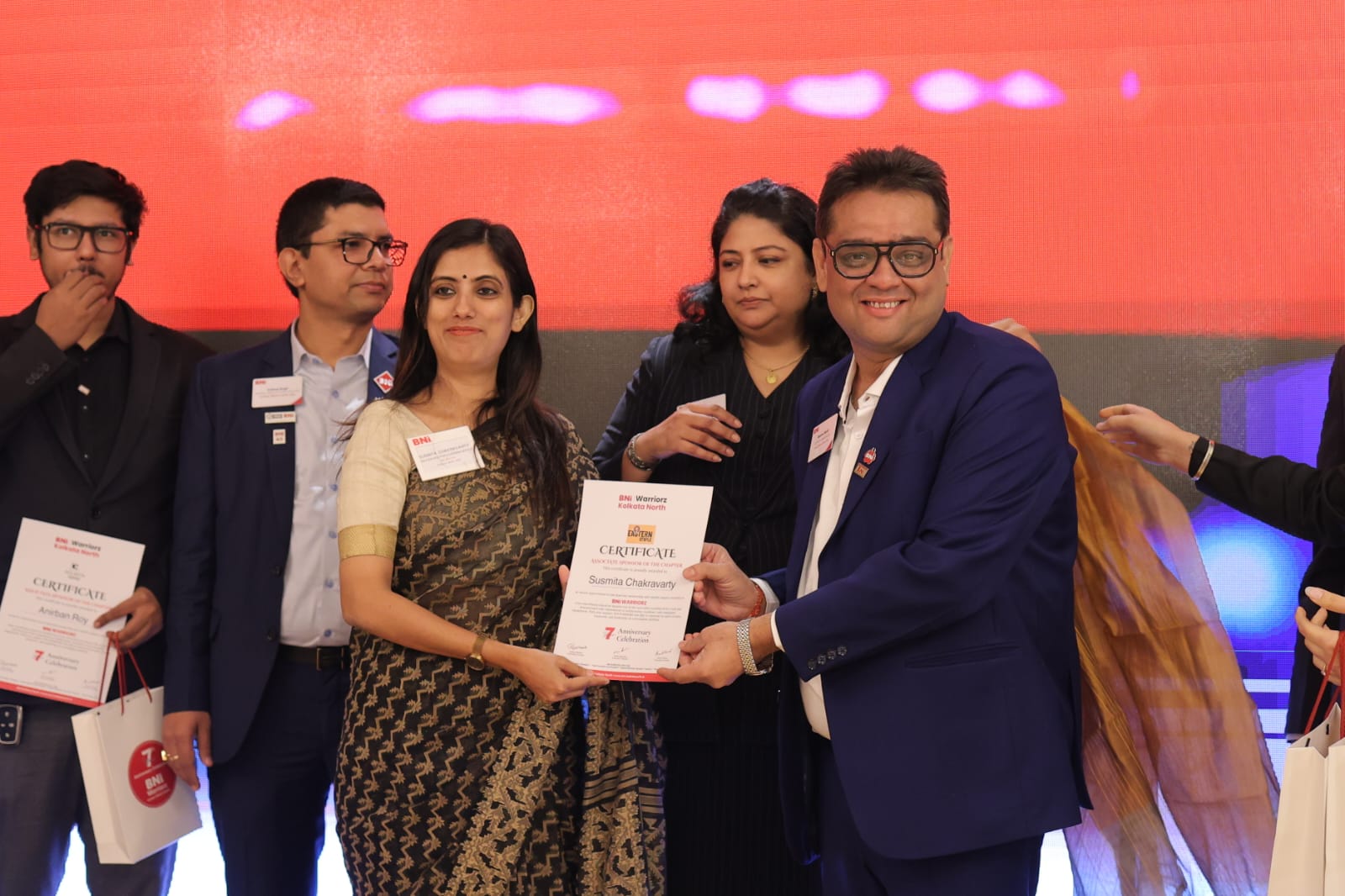
Sometimes a business begins with a simple act of care. During the pandemic's uncertainty, Susmita Chakravarty started cooking home-style meals for a few girls staying in a nearby PG. What began as a small gesture soon grew through trust and word-of-mouth into Eastern Staple, a structured institutional food service serving thousands of meals daily. In this conversation with THEWOOMAG, Susmita shares how empathy, operational discipline, and strong systems helped her scale from a home kitchen to managing large cafeterias and institutional kitchens.
TWM - Can you tell us about your journey from being a teacher to founding Eastern Staple? What sparked the idea?
Susmita Chakravarty: I have always been a teacher at heart. Teaching, for me, was never just about books—it was about care, patience, and being present. During the pandemic, I saw how hard everyday life had suddenly become, especially for students, office-goers, and people living alone. Food, which we often take for granted, became a daily worry.
I began by cooking a few meals for girls staying in a nearby PG. It was nothing formal—just home food, the way I would cook for my own family. One day, one of the girls said to me, “Didi, your food felt like home. I really needed this today.” That stayed with me. I realised food is not just nutrition; it is reassurance. That small beginning slowly became Eastern Staple, as more people around me started asking if they could get meals regularly.
TWM: Was there a defining moment when you realised this could grow beyond your home kitchen?
Susmita Chakravarty: There was no dramatic turning point—just steady signals. After the PG girls, nearby offices, and small institutions began asking for regular meal subscriptions. These were not big orders, but they were consistent. That consistency gave me confidence.
As demand grew, I knew I could not run this casually. We started putting basic systems in place—processes, hygiene routines, staff training. Step by step, Eastern Staple moved from a home kitchen to a structured operation. Till 2024, we were still largely a lunchbox-focused setup, but the foundations for institutional scale were already being laid. It grew because people trusted us and came back—not because we rushed to scale.
TWM: What were the biggest challenges while scaling, and how did you handle them?
Susmita Chakravarty: Institutional food is very different from restaurant or delivery food. People depend on these meals every single day—students, office staff, hospital workers. There is no room for inconsistency.
Till 2024, Eastern Staple was still largely a lunchbox operation. But by December 2025, we were serving close to 2,000 meals a day across corporate cafeterias, institutional hostels, an industrial plant, and large-scale events. At that scale, the pressure on systems increases sharply.
The biggest challenges were logistics, sourcing, team coordination, and maintaining the same taste and hygiene across kitchens. Another challenge is to serve with a smile, since each guest is special. We addressed this by putting strong systems and checklists in place:
● Clear SOPs for preparation, cooking, packing, and dispatch
● Regular team training so quality is repeatable
● Real-time monitoring of hygiene and dispatch
● Demand forecasting to reduce waste and avoid shortages
These systems helped us scale responsibly. Today, Eastern Staple operates at a yearly turnover of around ₹2.5 crore, proving that discipline and care can go hand in hand.
TWM: How do you maintain hygiene, consistency, and quality across locations?
Susmita Chakravarty: We treat every kitchen like a small business within the larger system. Our processes are inspired by step-by-step monitoring and HACCP principles, but we adapt them to real kitchen life.
Even as volumes increased significantly through 2025, the fundamentals never changed—same sourcing philosophy, same preparation discipline, and zero compromise on hygiene. Every meal follows preparation checklists, hygiene audits, and plating guidelines, all logged digitally.
Technology helps with planning and forecasting, but I still believe in human checks—tasting the food, speaking to the team, and listening. That balance keeps the food safe, consistent, and comforting.
TWM: How do women-led teams bring a different perspective to operations?
Susmita Chakravarty: Our kitchens are largely run by women, and I see a natural blend of care and empathy there. The systems are strict, but the environment is supportive. Senior staff guide new team members patiently, without compromising standards.
This reduces mistakes and builds confidence. People feel valued, and that reflects in the food they cook. A calm, respectful kitchen always produces better food.
TWM: Can you share a story that reflects your leadership or problem-solving approach?
Susmita Chakravarty: On one particularly high-demand day, there was a problem with one of the food items served. There was an issue in the kitchen. But, we had to manage last-minute changes- recipe adjustments, staff redeployment, and supply constraints. Because the systems were already in place and the team was trained, everyone knew what to do.
We followed the SOPs, made quick decisions, and supported each other. We completed the day without a single client complaint. That day reinforced my belief that strong processes and empowered teams are the real backbone of operations.
TWM: Were there moments when you had to adapt quickly to unexpected challenges?
Susmita Chakravarty: Yes, especially when we faced sudden demand surges from hospitals. Our forecasting tools helped, but what really mattered was the team’s ability to stay calm and flexible. We rearranged schedules, shifted resources, and delivered without disruption. It reminded me that resilience comes from preparation.
TWM: What leadership lessons stand out for women in operations-heavy businesses?
Susmita Chakravarty: Trust your intuition, but support it with structure. Empathy helps you build strong teams, but discipline keeps the system running. When you understand your processes deeply, scaling becomes manageable instead of chaotic.
TWM: How do you balance intuition, empathy, and discipline?
Susmita Chakravarty: Technology tells me the numbers, but people tell me the reality. I may adjust staffing based on experience levels or local challenges, even if the data says otherwise. That balance keeps both the system and the team healthy.
TWM: What excites you about the Cafeteria-as-a-Service (CaaS) model in India?
Susmita Chakravarty: CaaS brings structure to a fragmented space. Institutions no longer need to manage multiple vendors. With governed systems, predictable quality, and hygiene assurance, food becomes one less worry.
In 2025, when Eastern Staple moved from primarily lunchbox services to managing multiple cafeterias and institutions simultaneously, the value of a governed CaaS model became very clear.
As organisations focus more on employee well-being, this model fits naturally.
TWM: Your go-to comfort food after a long day?
Susmita Chakravarty: Simple dal and rice—or khichdi. Nothing fancy. Just food that lets you breathe.
TWM: One habit that keeps you grounded?
Susmita Chakravarty: Every day, I review numbers, taste food, and reflect on what went right or wrong. It keeps me connected—to the kitchen, the team, and the people we serve.
TWM: Who inspires you and why?
Susmita Chakravarty: Indrajit Lahiri, popularly known as Foodka (and currently, an advisor in Eastern Staples ), has been a mentor, constantly reminding me of clarity, responsibility, and the emotional role food plays. My team, clients, and family inspire me every day by trusting me to do this right.
TWM: Your strongest business and marketing tools?
Susmita Chakravarty: Operations run on SOPs, dashboards, and hygiene systems. Marketing happens through trust, client feedback and word-of-mouth. Consistency speaks louder than campaigns.
TWM: Advice for women entering operationally intensive businesses?
Susmita Chakravarty: Know your processes inside out. Hire carefully. Care deeply, but stay disciplined. Scale slowly and credibly. Respect will follow consistency.
TWM: Your vision for Eastern Staple in the next 5–10 years?
Susmita Chakravarty: It’s two-fold. Firstly, I want to see cafeterias serving staple, home-like food being served by Eastern Staple in each state in India. Secondly, I want Eastern Staple to set benchmarks in hygiene, reliability, and governance.
The way we scaled responsibly through 2024–2025—without diluting quality—has given me confidence that this model can be replicated thoughtfully across regions. Our goal is simple: to make daily meals worry-free for those who depend on them, and to show that structured, humane food systems are possible at scale.
Are you a woman entrepreneur who has built and scaled a business?
At THEWOOMAG, we believe powerful journeys deserve to be heard. If you have grown your venture with resilience, vision, and determination, your story can inspire thousands of women who are walking the same path.
📩 Write to us at editor@thewoomag.com or send us a message on our social media channels to get featured.

RELATED ARTICLES


![cover-76_-_How_do_I_stop_feeling_like_a_failure_and_rebuild_my_career[1].webp](https://www.thewoomag.com/backend/images/blogs/cover-76_-_How_do_I_stop_feeling_like_a_failure_and_rebuild_my_career[1].webp)

Advertisement

I-221, 4th Floor, Hilton Drive Avenue, Sec-50, Gurgaon, 122018, Haryana
info@thewoomag.com
+91-8586970572